
Find The Interview Link Below
I was contacted by Clinton Siegle through the Lift-Off Network after my first Sessions participation this past February. He offered to interview me and shared examples of his work, particularly his long-form written interviews. It took me some time to fully understand his approach, but after reading the questions he sent, I realized there was something distinctly different about what he does. Through several follow-up email exchanges, I came to better understand Clinton’s story—and felt that the only meaningful way to present this interview was to introduce his story alongside it.
Clinton Robert Siegle is an award-winning disabled independent filmmaker, archivist, writer, and storyteller whose work explores perception, resilience, memory, and imagination. Born in 1971, he has a U.S. American and Bolivian background and a family connection to the Crow Reservation through his mother who is adapted into the Crow tribe. He grew up across two Indigenous communities—the Sioux and Cheyenne reservations. Later in his career, he worked with NASA and on government contracts related to the Orion space capsule program, where he contributed to schedule management and coordination within wiring and capsule design teams.
His life changed dramatically after battling antibiotic-resistant infections that led to two hospice stays. The first resulted in the loss of part of his right ankle and left him partially deaf and blind due to treatment effects—something he did not fully recognize until returning to work. A second hospitalization followed, resulting in the loss of his left foot, temporary vision loss in both eyes, and permanent hearing loss in one ear. Before these experiences, his life revolved around his family, including his two daughters, and his work.
Now retired and unable to work, he lives with the lasting effects of these events, including ongoing changes in sight, hearing, memory, and his sense of personal history. Rather than allowing adversity to define him, he has transformed these experiences into art, storytelling, and purpose.
His creative journey began with poetry, autograph collecting, and long-form written interviews with film industry professionals. After hospice, during a period of financial uncertainty and recovery, he began reaching out to individuals in film and creative circles—connections that later developed through online networks.
In 2020, seeking distance from the noise and negativity of social media, he shifted from collecting autographs to conducting interviews. Due to his hearing and vision challenges, written interviews became more than a format—they became his primary way of engaging deeply with others and preserving voices that might otherwise go unheard.
From his quiet room in La Paz, Clinton describes interviews as “signal hunting,” seeking artists, filmmakers, and thinkers who carry originality, contradiction, and independent thought. He selects his subjects intuitively—drawn by their work, imagery, tone, or a subtle sense of perspective—and sees these conversations as a way of preserving what might otherwise fade: curiosity, creativity, and authentic human connection.
This process gradually led him into filmmaking after an interviewee assumed he hosted a podcast, prompting him to explore audio and visual storytelling. He began creating short films using archival photos from his interview subjects, which led to festival selections and awards. Much of his work has been developed through the Easterseals Disability Film Challenge. Since 2019, he has produced, directed, and written over 68 short films—made with minimum or no budgets, including more than 30 within a few weeks. His work, often combining cultural poetry, archival material, and experimental visuals, has earned him 14 awards. His first Easterseals entry, Dreamers, won four awards and marked the beginning of his continued advocacy for disability representation.
In his daily life, Clinton also uses AI tools as a practical and creative support system. He relies on them for writing, editing, research, subtitles, planning, and memory assistance—helping him navigate differences between remembered and present reality. These tools allow him to track conversations, rediscover information, develop short stories, and write letters centered on peace and hope, extending his ability to connect and create despite cognitive and sensory challenges.
From cultural poetry films like Ayer es Pasado to music videos and his “Industry Lens” interview series, Clinton continues to expand his work across film, writing, and dialogue—bringing an independent voice shaped by resilience, introspection, and a persistent search for what remains real beneath the surface.
Finally, I would like to thank Clinton for reaching out and offering to conduct this interview, which plays an important role in providing a deeper understanding of my work. You can find the interview link, along with other relevant links to Clinton’s work, listed below.
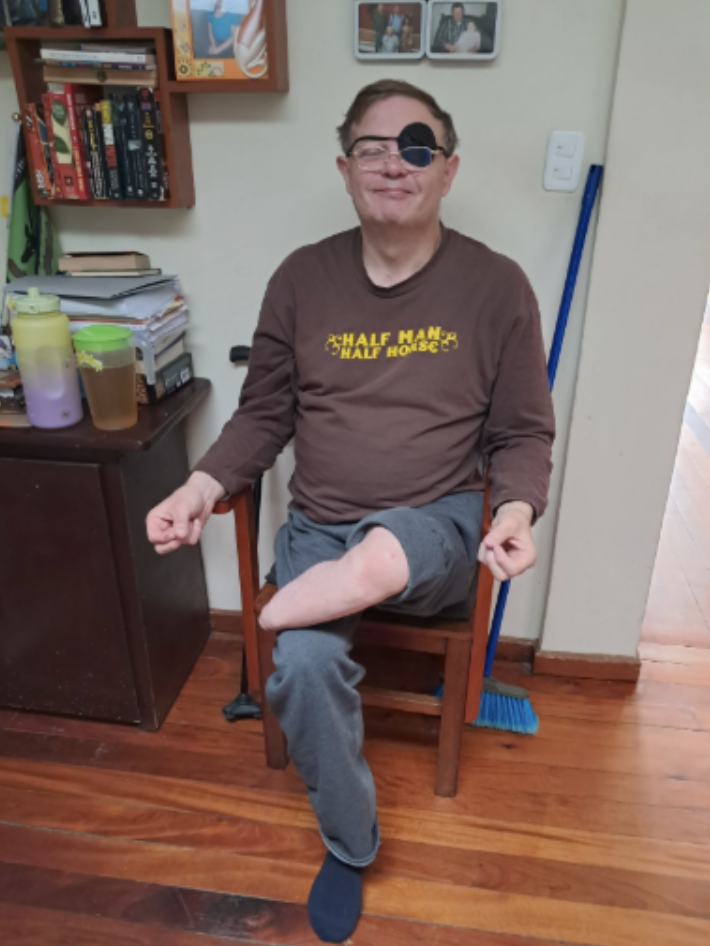
Clinton Robert Siegel