
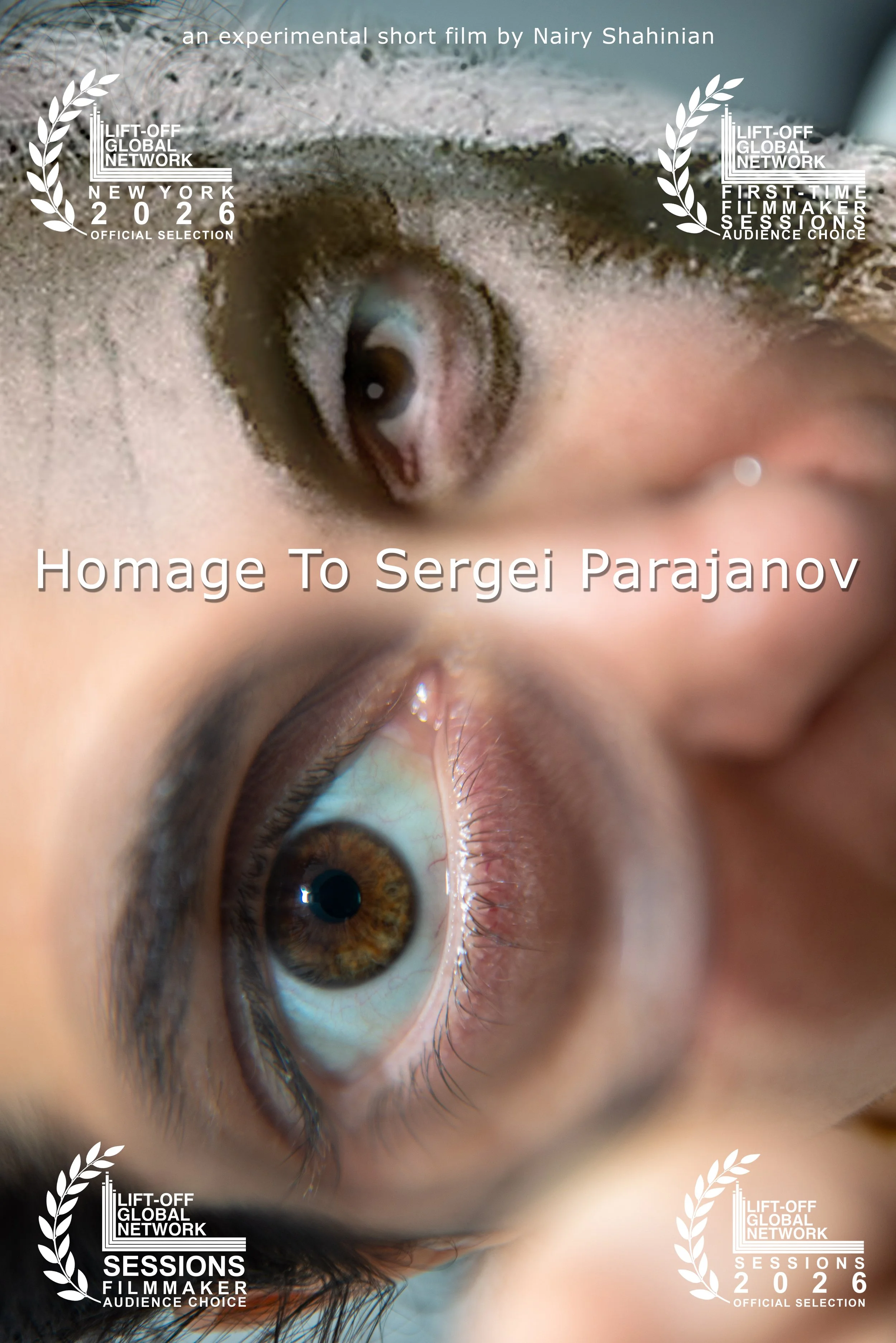
Shot entirely on mobile phones, this highly experimental film emerges from years of displacement, loss, and survival following the war in Syria, where my family once lived.
The film begins with footage captured in 2019 in a new family apartment in Armenia—where my family originates from—after more than six years of rupture marked by the looting of the family home in Damascus and the death of my father. Working with minimal means, I turned inward, using light, darkness, and self-portraiture to translate a mind compressed by responsibility and suppressed creativity, finally finding space to breathe in a long-awaited personal room for the first time since childhood.
The second part unfolds in Berlin, a long-imagined place where I began living in 2024. It is a city where creativity can exist freely, and the sequence takes place in front of the Brandenburg Gate, a symbol of peace and unity today—values that hold deep personal significance for me. The gate's iconography, layered with meanings accumulated throughout history, reflects the many environments, experiences, and circumstances that have influenced and shaped my life—while I continue to release what no longer belongs to me. Playing the duduk, a traditional Armenian instrument, becomes an act of arrival, reflection, and release. The film concludes as a quiet declaration of endurance and transformation, marking the beginning of a new creative chapter.
The film is dedicated to Sergei Parajanov, a Soviet-Armenian filmmaker and artist whose artistic freedom led to repeated persecution by Soviet authorities. Even while imprisoned, he continued to create using any materials available. His legacy stands as a powerful testament to creativity as an act of resistance under oppression, a theme this film reflects through its exploration of artistic freedom under constraint.